Modular Cabinets in the Philippines: The 2026 Guide to Custom, Durable, Space-Smart Storage
Key takeaways
- Modular cabinets combine cleaner shop-made finishes with custom layouts that fit PH condos and homes.
- For PH humidity, durability depends on material choice AND sealing—especially edges and sink areas.
- Hardware quality (soft-close hinges, full-extension drawers) is where long-term satisfaction comes from.
- Pricing usually follows linear-meter runs, with costs rising quickly as you add premium finishes and pull-outs.
Modular cabinets are everywhere in the Philippines—and for good reason. They offer the sweet spot homeowners want most: a custom fit without the renovation chaos, cleaner finishes, faster installation, and more predictable budgeting.
What you’ll learn
- What modular cabinets are (and what they’re not)
- Why modular cabinets are booming in Filipino homes
- Benefits you’ll feel day-to-day
- Materials that survive PH humidity (marine plywood vs MR/HMR MDF and more)
- Hardware details that separate “okay” from “premium”
- Condo-friendly layout ideas
- Modular cabinet price in the Philippines (what affects cost)
- Step-by-step process: measurement to installation
- Quality checklist for quotations
- Maintenance tips and FAQs
What are modular cabinets (and what are they not)?
Modular cabinets are pre-built cabinet “boxes” (modules)—base units, wall cabinets, tall pantries, drawers—designed in standard sizes that can be combined and adjusted to fit your space. Think of them as building blocks for kitchens, closets, laundry areas, and entertainment walls.
They’re not the same as:
- Ready-made/RTA cabinets: fixed options with limited sizing and finishes.
- Traditional on-site carpentry: built piece-by-piece in your home (often messier, longer, and more variable in finish consistency).
A well-made modular system gives you the “built-in” look—while keeping fabrication controlled in a workshop.
Why modular cabinets are booming in the Philippines
1) Smaller homes and condos demand smarter storage
In many urban developments, kitchen cuts are compact—so every wall and corner has to work harder. Modular cabinets help because they can be configured for tight galley kitchens, shallow counters, and vertical storage without relying on bulky one-size-fits-all furniture.
2) Faster renovations and cleaner finishes are now expected
Today’s homeowners compare suppliers based on finish quality, timeline, and clarity of scope. Modular systems are easier to price and usually quicker to install because more work is completed in the shop.
3) People want “custom” without renovation headaches
A modular plan gives you a clear cabinet count, layout, and cost drivers. That means fewer surprises—and less stress—especially if you’re renovating while living at home.
The real benefits of modular cabinets (beyond “it looks nice”)
Faster, cleaner installation
Shop fabrication reduces on-site cutting and dust; installation is more about leveling, fastening, and sealing.
More predictable budgeting
Quotes are commonly based on linear-meter runs or a defined set of modules, which makes comparisons easier.
Easier repairs and upgrades
If a door or drawer front gets damaged, modular parts are typically easier to replace than fully site-built cabinetry.
Better space efficiency
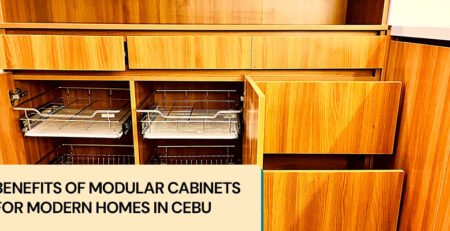
With good planning, you can add pull-outs, corner solutions, hidden bins, tray dividers, and tall storage that reduces clutter.
Materials that actually work in PH humidity and daily use
In the Philippines, cabinet failures usually come from moisture exposure plus poor edge sealing and low-quality hardware. Here’s a practical breakdown.
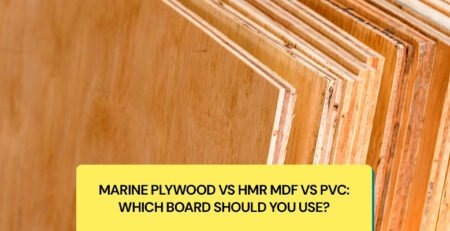
1) Marine plywood (great for cabinet carcass/boxes)
Marine plywood is often chosen for cabinet carcasses because it handles damp conditions better than standard boards when properly laminated and sealed. It’s a common pick for sink base cabinets, kitchens, and laundry areas.
- Pro tip: Marine plywood still needs correct sealing—especially cut edges and screw holes.
2) Moisture-resistant MDF (MR MDF) and HMR MDF (common for doors/panels)
Moisture-resistant MDF performs better than standard MDF in humid environments, but it’s not fully waterproof and should not be used where it will be in direct contact with water. HMR MDF is engineered for higher-humidity interior applications and is often used for doors, end panels, and cabinetry in kitchens and laundry areas—provided edges are sealed.
Rule of thumb:
- Near constant water exposure: prioritize marine plywood (or a non-wood option for that specific zone).
- Smooth painted/lacquer look: MR/HMR MDF is often used—just keep it properly sealed and away from standing water.
3) Edge banding matters more than most people think
Humidity attacks cabinets through exposed edges. A proper edge band acts like a seal that helps prevent moisture from penetrating the raw board edge—reducing swelling and premature failure. When comparing quotes, ask what edging is used (PVC/ABS), thickness, and how it’s applied.
4) Consider non-wood options in wet zones (selectively)
For under-sink areas, near laundry machines, or coastal homes, some homeowners choose PVC board or aluminum systems for specific sections to reduce swelling risk. Even then, hardware and sealing details still matter.
Hardware: the difference between “Instagram cabinets” and cabinets you’ll love using
If you open and close cabinets dozens of times per day, hardware is where you’ll feel quality.
Soft-close hinges and drawers
Soft-close systems are designed so doors and drawers close gently and quietly even with heavier loads or harder pushes.
Full-extension drawers
Full-extension runners let you access items at the back of the drawer—no more digging and forgetting what you already own.
Adjustable legs + proper leveling
In uneven floors (common in older units), proper leveling prevents door misalignment and annoying gaps over time.
Condo-friendly modular cabinet ideas (that feel custom)
Layout ideas that work well:
- Single-wall kitchen: simplest and often the most cost-efficient; maximize uppers to the ceiling.
- Galley kitchen: great for narrow spaces; keep clearances comfortable.
- L-shape: ideal for corner efficiency; use a corner solution to avoid dead space.
Storage upgrades worth paying for:
- Pull-out pantry (even a slim 150–300mm unit helps).
- Under-sink organizer with a protected, water-tolerant base.
- Drawer stack for utensils + pots (drawers beat shelves for daily use).
- Tall cabinet for brooms, mop, and vacuum.
Modular cabinet price in the Philippines (what affects cost)
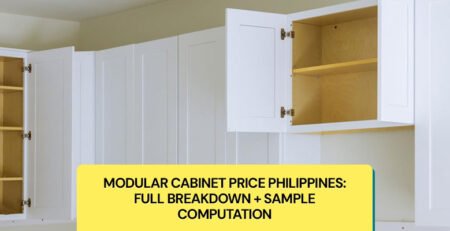
Prices vary by city, materials, finish, accessories, and complexity—but many suppliers quote modular cabinetry by linear meter. A commonly published local estimate ranges from about ₱8,000 to ₱35,000 per linear meter depending on specs.
What makes the price go up fast:
- Non-standard sizing (more custom cutting and fillers)
- Premium laminates or lacquer finishes
- Pull-out mechanisms, corner solutions, and tall pantry systems
- Thicker boards and higher-grade hardware
- Integrated lighting and specialty storage
Benchmark reference (optional):
If you want a mainstream comparison point, IKEA’s METOD kitchen system is offered with a 25-year guarantee (terms apply). Use this as a reference for how established modular systems position durability and warranty coverage.
Step-by-step: how a modular cabinet project should run
- Site measurement: Include ceiling height, window/door swings, plumbing points, outlet locations, and appliance sizes.
- Layout + 3D design: Confirm workflow, storage priorities, and where fillers/end panels go.
- Material + finish selection: Carcass, door material, laminate/paint finish, edging, and countertop interface.
- Shop fabrication: CNC cutting + edge banding + pre-drilling tends to produce cleaner consistency than purely on-site cutting.
- Installation + sealing: Proper leveling, wall anchoring, and sealing around sink/countertop edges are critical.
- Turnover + warranty: Request care instructions and clarity on what warranty covers.
Modular cabinet quality checklist (bring this when asking for quotes)
Construction
- What’s the carcass material (marine plywood vs MR/HMR MDF) and thickness?
- Are all cut edges fully edge-banded or sealed?
- Is there added protection for under-sink and wet-prone zones?
Hardware
- Soft-close hinges and drawer runners (ask for brand/model if possible).
- Full-extension drawers for base storage.
- Load rating for heavy drawers (pots/pans).
Practical design
- Do drawers clear appliance handles and door swings?
- Are there enough outlets and ventilation gaps where needed?
Health and indoor air (optional but smart)
Cabinet materials, adhesives, and paints can affect indoor air quality. If your household is sensitive, ask about low-odor or low-VOC options and ensure good ventilation during installation.
Maintenance tips for Philippine conditions
- Wipe spills fast—especially around the sink base.
- Keep good ventilation (an exhaust fan helps).
- Avoid harsh solvents on laminates and edge bands.
- Check hinges every 6–12 months for alignment in high-use kitchens.
- If you live near the sea, watch for corrosion on hardware and consider upgrades.
FAQs
Are modular cabinets better than built-in cabinets?
They can be—especially when you want cleaner shop-fabricated finishes, easier replacement, and more predictable pricing. Built-in/on-site carpentry can still be excellent when workshop discipline and finishing quality are strong.
What material is best for kitchen cabinets in the Philippines?
For many homes, marine plywood is a popular choice for cabinet carcasses in kitchens and wet-prone zones (when properly laminated and sealed). For doors/panels that need a smooth finish, MR/HMR MDF is commonly used—but protect it from standing water and keep edges sealed.
How much do modular cabinets cost in the Philippines?
Costs vary by size, layout complexity, materials, finishes, and accessories. Many suppliers quote by linear meter, and published estimates often range from basic to premium depending on specs.
What’s one hidden detail that affects cabinet lifespan?
Edge sealing and edge banding. Exposed edges are where moisture can enter and cause swelling, especially in humid climates.