Marine Plywood vs HMR MDF vs PVC: Which Board Should You Use?
In the Philippines, the ‘best’ cabinet board depends on where it will live: under the sink, near the cooktop, in a humid condo, or in a laundry area. This guide compares marine plywood, HMR MDF, and PVC boards based on real-world performance: moisture, strength, finish, and maintenance.
TL;DR decision guide
- Want the toughest cabinet boxes? Start with marine plywood for the carcass.
- Want the smoothest modern doors (especially painted)? HMR MDF is common – but protect edges and avoid standing water.
- Need true waterproofing in wet zones? Use PVC boards selectively (under-sink/laundry) and support spans properly.
- No matter the board: edge banding and sealing decide lifespan.
Quick definitions (so we’re comparing the right things)
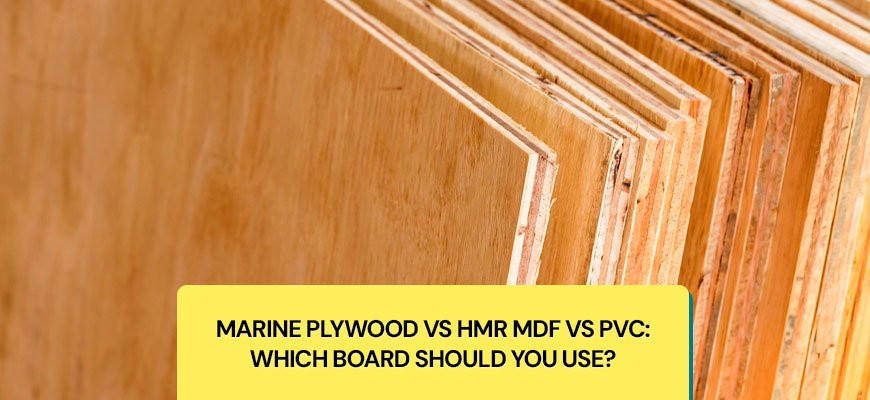
- Marine plywood: plywood designed for damp or wet-prone environments when properly sealed and laminated.
- HMR MDF: High Moisture Resistant MDF – MDF made with moisture-resistant resin/binders for high-humidity interiors and occasional wetting (not constant water exposure).
- PVC board: plastic-based boards (often PVC foam boards). Marketed as waterproof and termite-resistant; performance depends on thickness and board type.
How these boards usually fail (and how to prevent it)
Marine plywood
- Fails when you buy low-grade ‘marine’ that has voids or poor glue lines, or when edges are left unsealed.
- Prevention: specify grade, insist on sealed edges, and protect the sink base with liners/trays.
HMR MDF
- Fails through swelling at exposed edges (especially near sink leaks) and screw holes if not sealed.
- Prevention: edge band all exposed edges, avoid placing HMR MDF where it can sit in water, and use proper fastening.
PVC board
- Fails through sagging on long spans, weak screw holding (depending on type), and possible heat deformation near cooktops.
- Prevention: use thicker/denser boards, add supports, and avoid high-heat zones.
Comparison matrix (what matters for cabinets)
| Factor | Marine plywood | HMR MDF | PVC board | Practical takeaway |
| Moisture | Good when sealed | Moisture-resistant, not waterproof | Waterproof core | Use waterproof boards selectively; sealing still matters |
| Strength | Strong and stiff | Fair; edges need care | Varies by type | Avoid long unsupported spans with PVC |
| Screw holding | Good | Can strip if over-tightened | Often weaker than wood boards | Use correct screws and anchors |
| Finish | Great with laminates | Best for smooth paint/laminate | Appearance varies | Pick finish system first, then match board |
| Heat near cooktop | Generally stable with proper clearance | Avoid direct heat | More sensitive to heat | Keep PVC away from heat zones |
Where to use each board (Philippine home cheat sheet)
| Cabinet zone | Best pick | Good alternatives | Avoid | Notes |
| Under-sink base | Marine plywood or PVC | Hybrid (marine carcass + PVC liner) | Unprotected MDF | Plan for leaks; add removable tray/liner |
| Base cabinets (general) | Marine plywood | HMR MDF (dry areas) | Thin PVC on long spans | Base cabinets carry load and get kicked/cleaned |
| Wall cabinets | Marine plywood or HMR MDF | – | – | Lower risk than bases, but still humid |
| Doors/drawer fronts | HMR MDF for painted look | Marine plywood with laminate | – | Edge banding and finish quality matter most |
| Laundry lower cabinets | Marine plywood or PVC | – | Unsealed MDF | Humidity + occasional splashes |
Spec tips that prevent expensive regrets
Marine plywood: how to specify
- Ask for the exact grade/brand and thickness (not just the word ‘marine’).
- If available, look for marine plywood made to recognized standards such as BS 1088 (often used to describe marine plywood quality).
- Require sealed/edge-banded edges, especially for sink base cut edges and drilled holes.
HMR MDF: where it shines
- Best for very smooth door panels and modern flat-door designs.
- Treat it as ‘humidity resistant’ not ‘waterproof’. Keep it away from standing water.
- Edge banding is non-negotiable: exposed MDF edges are the weak point.
PVC board: how to use it correctly
- Prefer denser/thicker PVC foam boards over hollow variants for better rigidity.
- Support long spans to reduce sagging risk.
- Avoid installing PVC right beside heat sources unless properly shielded.
Edge banding and sealing: the hidden quality marker
Edge banding protects raw board edges from moisture and chipping. In kitchens and humid interiors, that edge protection can be the difference between cabinets that look new after years and cabinets that swell early.
A practical hybrid spec (recommended for most PH kitchens)
- Carcass/boxes: marine plywood for base cabinets; wall cabinets can be marine plywood or HMR MDF depending on supplier system.
- Doors: HMR MDF for painted look; laminate doors can use marine plywood or HMR MDF depending on finish.
- Wet zones: PVC boards only where you need true waterproofing (under-sink, laundry base), with proper supports.
Maintenance tips for Philippine conditions
- Wipe sink-base splashes fast; don’t let water sit on seams.
- Keep ventilation strong (rangehood + airflow) to reduce humidity load.
- Avoid harsh solvents on laminates and edge bands; use mild soap and water.
- Re-tighten/adjust hinges yearly in high-use kitchens.
FAQs
Is HMR MDF waterproof?
No. HMR MDF is designed to resist moisture better than standard MDF and is used in high-humidity interiors, but it is not meant for constant water exposure. Sealed edges and good installation details are still required.
Should I use PVC board for the entire kitchen?
PVC boards can be great in wet zones, but strength varies and heat resistance can be a concern near cooktops. Many homeowners use PVC selectively for under-sink or laundry sections, then use marine plywood/HMR MDF elsewhere.
What’s the single most important detail for cabinet durability?
Edge protection: edge banding and sealing. Moisture entering at exposed edges is a common cause of swelling and early failure.